

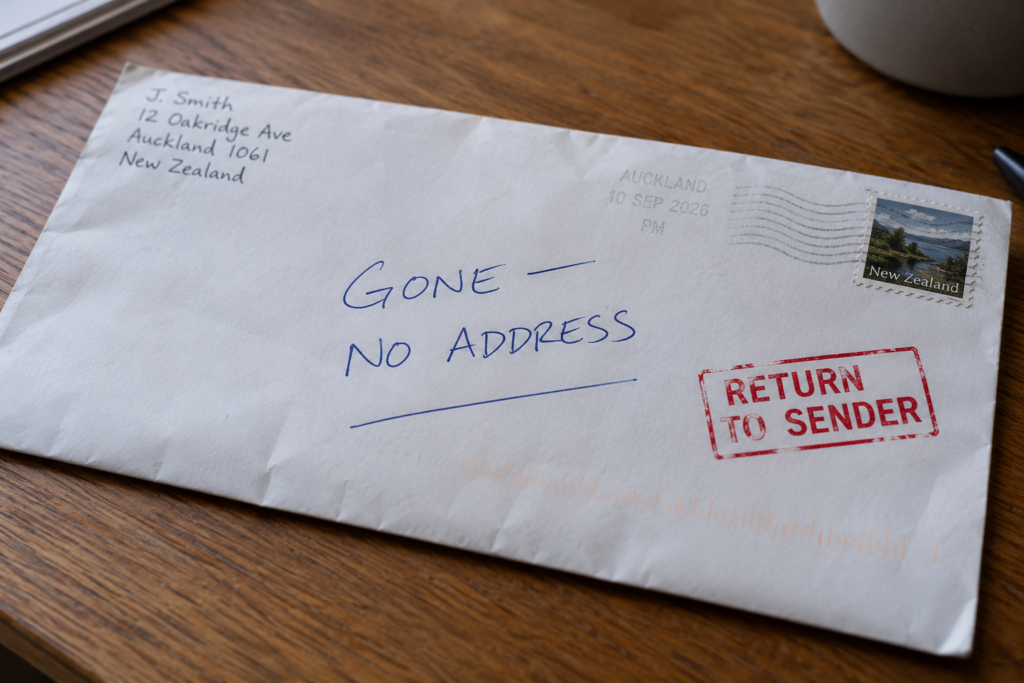
When a customer communication doesn’t reach its destination, it’s tempting to write off the cost as a wasted stamp. In reality, that returned letter or bounced email is the cheapest part of the problem. The real expense sits in everything that happens next, and for most organisations it stays invisible until someone goes looking for it. Research by Gartner puts the average cost of poor data quality at least US$12.9 million a year per organisation.
Why bad data costs more than it looks
A single failed communication rarely ends with the failure. There’s the reprint. The repost. The manual work to trace what went wrong, correct the record, and send it again. On its own, that’s a minor annoyance. But communications aren’t sent one at a time. Repeat that small failure across thousands of customers, and the cost compounds quickly: in materials, in postage, and in the staff hours spent chasing and fixing.
The problem hits pricing, too
Data quality doesn’t just affect delivery. It affects what you pay to send in the first place. Pricing is built on volume and address accuracy, and both assume your data is clean. When it isn’t, the maths quietly works against you. Duplicate records mean duplicate sends. Missing or malformed details mean extra handling and exceptions. Outdated addresses mean items that were never going to arrive, paid for all the same.
Each of these issues looks trivial in isolation. The trouble is they don’t happen in isolation. Add them up across every channel, every campaign and every month, and the true cost of poor data becomes a line item worth paying attention to.
Fixing it before it reaches production
The good news is that most of this cost is avoidable, and the fix isn’t complicated. The key is catching data quality issues before a job goes to production, not after the returns start coming back. Cleansing and validating data upfront, removing duplicates, and standardising formats means you send accurate communications the first time, at the volume you actually intended.
The payoff is straightforward: lower costs, fewer reprints, less manual rework, and communications your customers can rely on receiving. Clean data doesn’t just save money. It protects the relationship every one of those communications is meant to build.
Ready to find out what bad data is really costing you?
At Dataprint, we help organisations catch and resolve data quality issues before they hit production, so every communication counts. If you’d like to understand where your data might be quietly driving up costs, get in touch with our team for a conversation about your next print or communications run.